

About Porcelain Slabs and Surfaces
The porcelain surfaces crafted by WilgusIQ in Springfield, Missouri, are not porcelain tiles but full-size slabs of amazing strength and versatility. What are the best uses for porcelain? To find reliable answers, scroll or click on one of the questions below.
Diamond Mine Porcelain wall.
Does porcelain make a good kitchen countertop?
Based on customer feedback, WilgusIQ does not recommend porcelain as a kitchen countertop. Porcelain slabs are an excellent option for walls, showers, floors, and fireplace surrounds, but as a kitchen countertop it is vulnerable to chipping. Once damaged, porcelain is difficult to restore to its original appearance. Why is that so?
Porcelain is compacted and super-heated in a process that makes it as strong as granite but more brittle and rigid than natural stone. That makes it more prone to chip, especially around the edges. And while some premium brands feature through-body designs, nearly all porcelain designs are on the surface. If the surface is chipped, there is no cost-effective way to recreate the original design and finish.
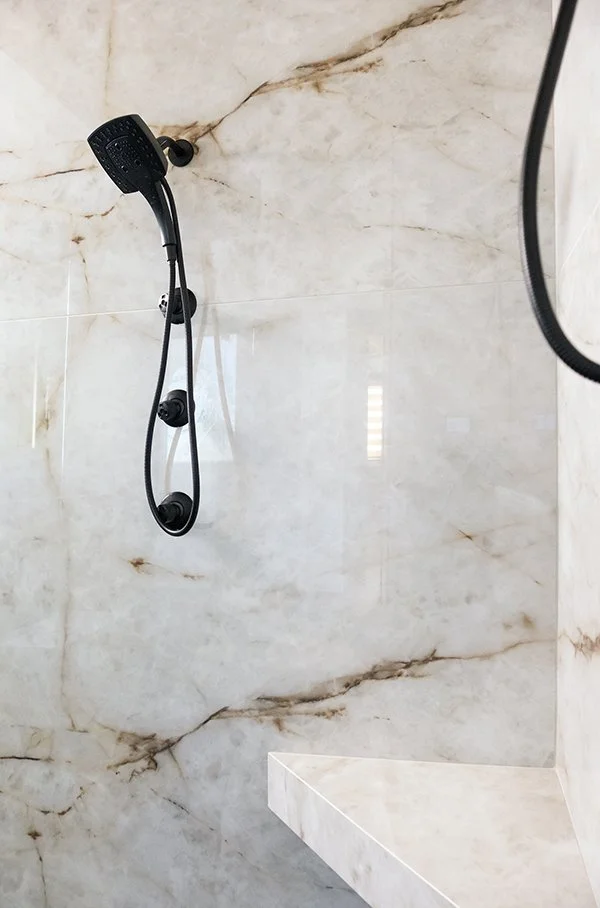
Himalayan Crystal Porcelain shower in Kimberling City, MO, by WilgusIQ.
Are porcelain slabs good for showers, walls, and fireplace surrounds?
Porcelain slabs are an excellent option for showers, walls, and fireplace surrounds because they are available in thin, large-format slabs, are hard as granite and heat-resistant, and are non-porous. Because porcelain is non-porous, it’s hygienic, easy to clean, and highly stain-resistant.

Sodalite Porcelain wall in Marshfield, MO, by WilgusIQ.
What are porcelain slabs made of?
The porcelain that becomes full-sized slabs begins as Kaolin, also known as China Clay. Its exact composition can vary, but it is primarily composed of kaolinite, feldspar (a principal component of granite), and quartz. These minerals can be combined in different measures along with sand, clay and finishing compounds as the raw materials of porcelain.

Kaolinite at Lake Kaolin, Indonesia.
How are porcelain slabs made?
The individual minerals that make up porcelain are ground into fine particles and combined into precise formulations. The atomized mixture is subjected to enormous pressure, in some cases up to 15 tons. The process squeezes out most of the air from between the particles. The result is an incredibly compact slab, typically with a thickness of between 6mm and 12mm.
At this point the slabs are dried and digitally printed. Any texture or glaze is added and the slabs are sent to a specialized oven called a kiln. Inside the kiln, the firing process can reach temperatures up to 2,200 degrees Fahrenheit. No wonder porcelain is heat-resistant! Edges and finishes are refined and then the slab is ready to be shipped.
Do porcelain countertops chip easily?
Some homeowners report chipping, others do not. Various factors may be at play, including the way the slabs were fabricated and installed, quality of the cabinetry, and even how much a house has settled after construction. Experts also point out that the manufacturing process that gives porcelain its strength also makes it more brittle than natural stone and vulnerable to chipping.
Can chips in porcelain countertops be repaired?

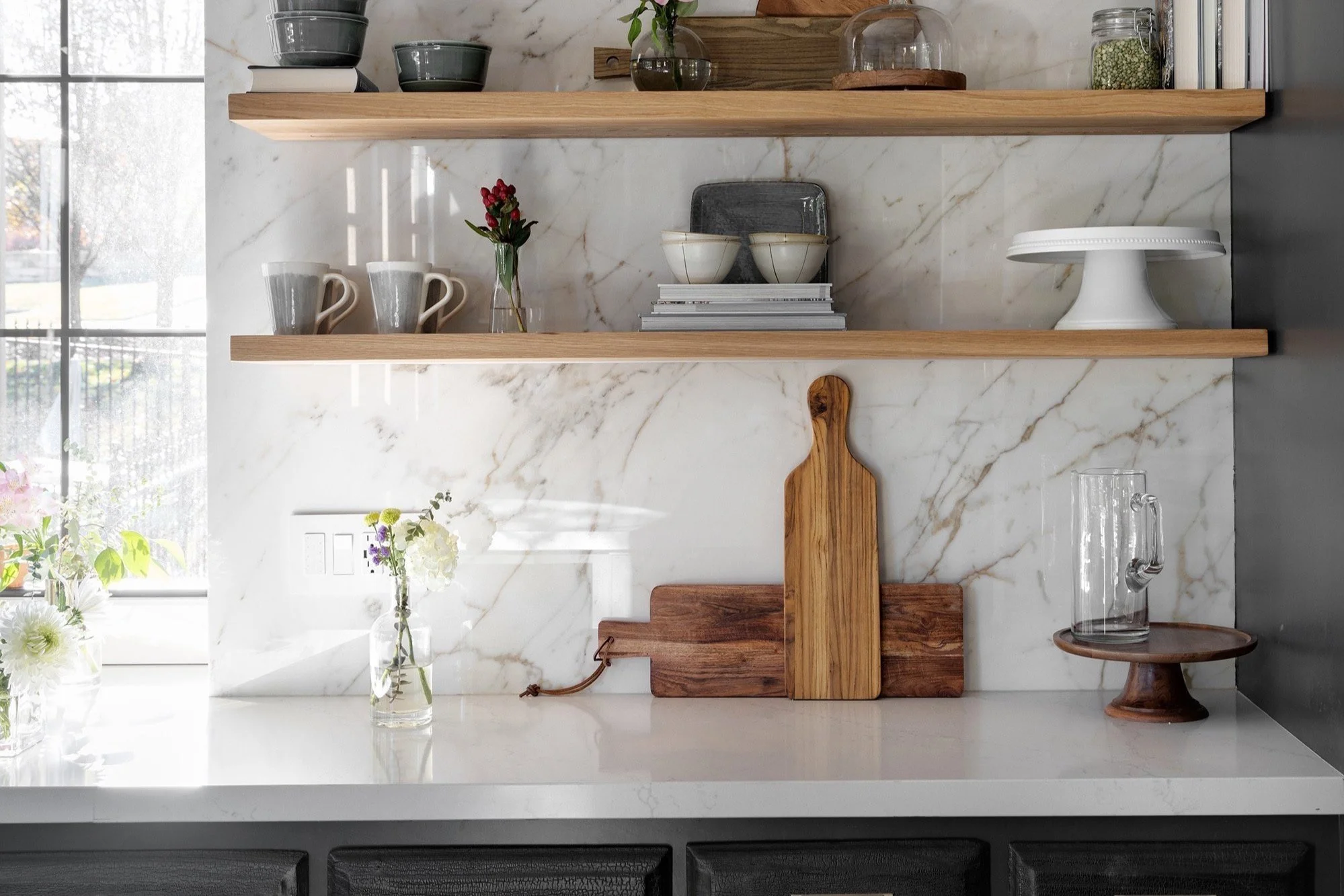
Marble-style porcelain.
Yes, chips can be repaired with acrylic or other fillers, but a porcelain repair job may be more noticeable than a comparable natural stone repair. That’s because a rock’s color permeates the whole stone, but color and pattern of porcelain are typically on the surface.
If you are concerned about a possible chip repair, you may want to consider a light-colored porcelain that matches the underlying neutral color, such as one of the many marble patterns available.
Does porcelain need to be sealed?
No. The purpose of sealing a countertop is to close off the natural pores in a material such as stone, and porcelain has no pores. That makes porcelain very easy to take care of as well as hygienic and stain-resistant.
What colors does porcelain come in?
Here’s where we get to the true genius of porcelain! Because the colors, patterns, and texture are designed into the slab, porcelain can mimic other materials with stunning accuracy. Marble, soapstone, wood, cement — all can be recreated in easy-care porcelain! Browse our Porcelain page to see a sample of colors and designs.

Is it wood or is it porcelain?
It may look and feel like wood, but this is actually a porcelain slab available through WilgusIQ.
How much does porcelain cost?
While porcelain slab prices are comparable with other quality materials, fabrication and installation of this material is more complex and often more expensive than stone. With so many variables for each project, the best approach is to get a comparative quote of different surfaces. No fabricator in the 417 area can beat WilgusIQ’s selection of fine materials or give you greater freedom in choosing exactly what you want. Select Free Quotes to see how easy it is to receive your no-obligation estimate.